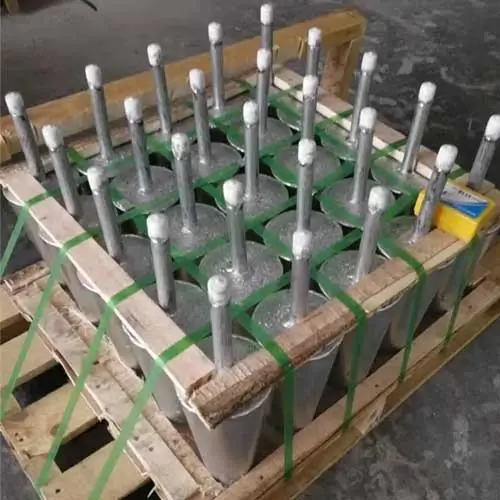
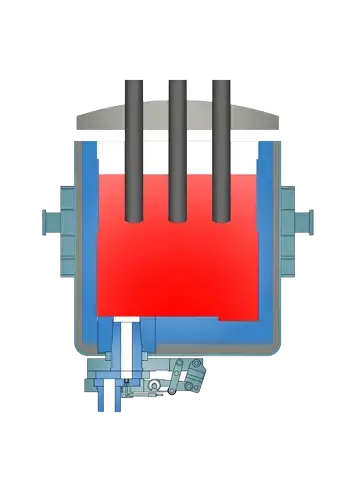
Inert gas is blown into molten steel through permeable bricks to agitate the steel, achieving purposes such as homogenizing composition, regulating temperature, and removing inclusions. The performance of permeable bricks directly affects the refining effect of the ladle and the quality of the steel. Therefore, this paper proposes the usage requirements for permeable bricks in ladles, describes the current research status of permeable bricks in recent years, and finally looks forward to the future development direction and research focus of permeable bricks.
A permeable brick is installed at the bottom of the ladle, and inert gas is blown into the ladle to stir the molten steel, causing inclusions in the molten steel to float to the slag layer, thus homogenizing the composition and temperature of the molten steel [1]. Therefore, the permeable brick is an important functional component of ladle refining. As the requirements for steel quality, purity and other indicators become higher and higher, the permeable brick also highlights its important role, and at the same time determines the production rhythm and steelmaking cost of steelmaking.
In recent years, many scholars have studied the effects of additives such as spinel powder, fused zirconium corundum, TiO₂, and magnesia on the performance of slotted permeable bricks, altering their microstructure and improving their thermal shock resistance through mechanisms such as microcrack toughening and phase transformation toughening. For dispersed permeable bricks, the effects of additives and particle composition on their performance have been investigated, providing a theoretical basis for improving their performance. Finite element method simulations have been used to analyze the generation of internal thermal stress in permeable bricks, and mathematical simulations have been used to analyze the internal thermal stress during argon blowing, providing researchers with a theoretical basis for reducing internal thermal stress in permeable bricks to improve their service life. Currently, permeable bricks have become a bottleneck for further improving the service life and safe operation of steel ladles, requiring deeper improvements. Therefore, this paper reviews the current research status of permeable bricks for steel ladles and points out their future development directions.
1.Performance requirements for permeable bricks used in steel ladles
1.1 Thermal shock resistance
During use, the permeable bricks in steel ladles are subjected to frequent thermal shock; therefore, thermal shock resistance is one of the most important performance characteristics of permeable bricks. The working surface of the permeable brick is in direct contact with molten steel at 1600℃, while argon gas at near room temperature is blown in from its tail end, creating a significant temperature gradient inside the permeable brick and generating substantial thermal stress. Under this thermal stress, the working surface of the permeable brick is prone to delamination, spalling, and cracking, thus affecting its performance.
1.2 Slag erosion resistance
The permeable bricks used in steel ladles are subject to the corrosive effects of steel slag, especially in the early stages of their use. Their working surfaces come into contact with molten slag, and components such as CaO and SiO₂ in the slag react with Al₂O₃ in the permeable bricks to form low-melting-point substances such as CaO·Al₂O₃, 3CaO·Al₂O₃, 12CaO·7Al₂O₃, CaO·Al₂O₃·2SiO₂, and 2CaO·Al₂O₃·SiO₂. These low-melting-point substances can clog the ventilation channels on the working surface of the permeable bricks. Furthermore, these substances are washed away when in contact with high-temperature molten steel, causing melting and damage to the permeable bricks and reducing their service life.
1.3 Erosion resistance
During the refining process, argon gas enters the ladle through the permeable bricks to agitate the molten steel. The high-speed flow of the molten steel and the gas flow create a “vortex,” which has a strong scouring effect on the permeable bricks and accelerates their melting loss. Therefore, the permeable bricks are required to have strong resistance to spalling, high-temperature strength, and high-temperature resistance to ensure their scouring performance.
1.4 Oxygen resistance
After steel is poured on the continuous casting platform, to ensure the permeability of the permeable bricks, the residual steel and slag on the working surface of the permeable bricks need to be treated with oxygen. The residual steel oxidizes upon contact with oxygen, and the heat generated by the combustion of the oxygen tube melts the residual steel and slag on the working surface, thus cleaning the working surface of the permeable bricks. During oxygen treatment, the temperature at the tip of the oxygen lance is extremely high, reaching over 2000℃, exceeding the refractoriness of the permeable bricks. Low-melting-point phases are easily generated on the working surface of the permeable bricks during oxygen treatment, requiring strict control of the oxygen treatment process to prevent excessive oxygen consumption and damage to the permeable bricks. Therefore, the permeable bricks must be made from high-purity raw materials to improve their refractoriness and thus enhance their resistance to oxygen treatment.
2.Types and properties of permeable bricks for steel ladles
For permeable bricks used in steel ladles, common permeable bricks include slotted and diffused types. However, they suffer from problems such as blocked ventilation channels, erosion and spalling, and low high-temperature strength. It is necessary to explore practical and feasible improvement measures to significantly improve the performance of permeable bricks and better meet the stringent requirements of steel refining processes.
2.1 Slotted Permeable Bricks
By pre-embedding combustible polyester strips in the castable, which are oxidized at high temperatures to form air-permeable channels, this type of slit-type permeable brick is still the mainstream product for steel ladle permeable bricks both domestically and internationally.
2.1.1 The Influence of Slits on the Performance of Slit-Type Permeable Bricks
Liu Huimin et al. used the finite element method to simulate the distribution of internal thermal stress in permeable bricks during use. The results showed that the center of the permeable brick is an isostatic stress zone, while the high-stress zone is located around the slits. The radial position of the slits has little effect on the maximum thermal stress of the permeable brick. When the slit deflection angle is between 30° and 45°, it is beneficial to reduce the internal thermal stress of the permeable brick.
Liu Huimin et al. studied the influence of slit size and number on the thermal stress of permeable bricks. The results showed that shortening the slit length can reduce the overall thermal stress of the permeable brick; appropriately increasing the slit width can reduce the thermal stress at its ends; increasing the number of slits can reduce the thermal stress at its ends, but at the same time, it will increase the thermal stress in other areas of the permeable brick.
Liu Huimin et al. studied the influence of slit location on thermal stress during the hot working process of permeable bricks. The results showed that the internal thermal stress distribution of the permeable brick was uneven, with high stress areas at and around the slit end. When the distance between the slit end and the edge of the permeable brick was greater than 5 mm, the radial position of the slit had little effect on thermal stress. A radially radial distribution of the slits was more reasonable. A permeable brick diameter of approximately 140 mm was optimal for lower thermal stress.
Xue Junzhu et al. designed the slits of permeable bricks as an arc-shaped ring structure, with 1-3 rings of arc-shaped gaps. They believed that this design effectively alleviated thermal stress during use and reduced the occurrence of brick breakage.
Wang Long et al. designed the slits of permeable bricks as rings, with a portion of the castable refractory connecting the inner and outer rings to ensure a tight bond. Strong mixing was achieved at a relatively low blowing pressure during the experiment. Compared with ordinary slit-type permeable bricks, the service life was increased by 3-4 cycles, and a 100% blowing rate was achieved during the experiment.
By rationally designing and arranging the slits in the slit-type permeable brick, the internal thermal stress of the permeable brick during argon blowing can be reduced to a certain extent, thereby improving its thermal shock resistance and extending its service life.
2.1.2 Effect of Additives on the Performance of Slotted Permeable Bricks
Some researchers have studied the addition of magnesium oxide to the raw materials of permeable bricks. At high temperatures, the magnesium oxide reacts with alumina or corundum powder in the permeable brick to form in-situ spinel. Due to the expansion effect of the in-situ spinel, microcracks are generated around it, reducing the energy for the propagation of the main crack. According to the principle of microcrack toughening, the formation of in-situ spinel is beneficial to improving thermal shock resistance; however, the addition of excessive magnesium oxide causes microcracks to develop into destructive cracks, reducing both the material strength and thermal shock resistance.
ZrO₂ undergoes a phase transition with temperature, and this phase transition is a reversible process. This induces microcracks in the matrix, forming at the interface between the ZrO₂ and corundum phases, thereby improving the thermal shock resistance of the permeable brick. However, its strength at both room temperature and high temperature will decrease slightly. Gao Xiang et al. introduced nano-ZrO₂ into alumina materials. During sintering, the diffusion rate of nano-ZrO₂ particles was relatively lower than that of the matrix Al₂O₃ particles. ZrO₂ mainly existed within the alumina crystals and at grain boundaries. ZrO₂ particles located at grain boundaries strengthened the grain boundaries due to their “pinning” effect on cracks and dislocations; simultaneously, due to the toughening effect of microcracks, they enhanced the thermal shock resistance of alumina materials. Nano-ZrO₂ could theoretically have positive effects when added to permeable brick materials.
Aluminum titanate (Al₂O₃·TiO₂) has a low coefficient of thermal expansion, close to zero, and the differences in its microstructure result in varying thermal expansion rates along different crystal axes. During cooling, grain boundary microcracks are easily generated, thus contributing to toughening. The introduction of TiO₂ can promote the sintering of corundum-spinel castables, induce the formation of CA6 in a network structure, and improve the thermal shock resistance of corundum-spinel permeable bricks. Some researchers have studied the preparation of corundum castables using tabular corundum, activated alumina micropowder, and calcium aluminate cement as main raw materials. Adding 0.5% nano-TiO₂ by mass can accelerate the formation of CA6 in the castable, which is beneficial for improving the intermediate-temperature strength of the castable. After high-temperature firing, it exhibits micro-expansion and improved thermal shock resistance. However, if excessive TiO₂ is added, a large amount of liquid phase will be generated in the system, increasing strength but decreasing thermal shock resistance.
Materials that combine ceramic materials with metals, possessing both the toughness of metals and the high-temperature strength, high-temperature oxidation resistance, and corrosion resistance of ceramics, are called cermet materials. Xu Pingkun proposed mixing Al₂O₃, Al(OH)₃, Cr, and Cr₂O₃ in a certain proportion, while adding an appropriate amount of Mo. This increased the number of thermal shock cycles during air cooling from medium temperature to room temperature to over 1000. The drawback was a decrease in high-temperature creep performance. Liu Hongkang mixed aluminum powder with fine chromium oxide powder and, in a sealed, insulated environment, used an aluminothermic reaction to generate metallic Cr and Al₂O₃. Then, surface oxidation was used, where some of the surface Cr was oxidized to Cr₂O₃ and partially dissolved into the alumina, ensuring a tight bond between the metallic Cr and the alumina particles. The resulting corundum permeable brick exhibited a 20%–30% increase in flexural strength retention after thermal shock, and its room-temperature flexural strength reached 22.1 MPa. Other studies have also investigated the effects of tungsten and iron on the properties of alumina materials, both showing some improvement in high-temperature performance. The choice should be made based on specific needs.
2.2 Dispersion-type permeable bricks
The permeable bricks produced by forming through-holes by loosely packing the material into particles and using them as air passages are considered to be dispersion permeable bricks. Xue Zhenliang et al. [26] studied that dispersion permeable bricks can generate small-diameter bubbles during the refining process of molten steel, which can increase the probability of bubbles capturing inclusion particles and is beneficial to the production of clean steel. However, its disadvantages are that it is not resistant to oxygen and has low strength.
2.2.1 Effect of Additives on the Performance of Dispersion-Type Permeable Bricks
Qiu Xin et al. investigated the effect of MgCO₃ on dispersed permeable bricks. MgCO₃ begins to decompose at approximately 350 °C and decomposes completely at 900 °C, generating MgO and CO₂. During further heating, MgO reacts in situ with Al₂O₃ to form spinel, improving room-temperature performance and thermal shock resistance. However, excessive MgCO₃ production leads to excessive CO₂ gas, increasing the apparent porosity of the material and reducing the bonding between particles. Furthermore, excessive MgO, after high-temperature firing, increases the content of low-melting-point phases, resulting in reduced thermal shock resistance.
Qiu Xin et al. also investigated the effect of MgCO₃ micropowder on the performance of corundum-based dispersed permeable bricks. At high temperatures, CaCO₃ decomposes into highly reactive CaO. CaO reacts with fine corundum powder or active α-Al₂O₃ micropowder in the matrix to form CA₆. The network structure of CA₆ strengthens the bonding between matrices, improving the thermal shock resistance of the samples.
Liu Xin et al. studied the effect of zircon addition on dispersion-type permeable bricks. The results showed that when the zircon mass fraction was 2%, the formation of low-melting-point phases and mullite phases at high temperatures promoted the bonding between particles in the matrix, thereby improving the strength and permeability of the sample, resulting in superior overall performance.
Xiong et al. studied the effect of La₂O₃ on the performance of dispersion-type permeable bricks. The in-situ reaction of La₂O₃ with Al₂O₃ to form lanthanum hexaaluminate activated sintering and refined alumina grains, causing crack deflection or branching and improving the thermal shock resistance of corundum-based permeable materials. Appropriately increasing the size and relative volume fraction of aggregate pores could improve the overall performance of dispersion-type permeable bricks.
Lan Zhenhua et al. studied the introduction of an appropriate amount of ZrB₂ into permeable bricks. Because ZrB₂ has excellent thermal conductivity, it can reduce the temperature gradient of the permeable bricks, thereby improving the material’s thermal shock resistance. ZrB₂ was added in the form of ZrB₂-corundum composite powder, and after molding, it was sintered with embedded carbon to produce permeable bricks. These bricks were used in the smelting of molten aluminum, and no blockage of the permeable channels occurred, with a service life exceeding expectations. This permeable brick can be considered for testing on steel ladles.
Liu Chenhui et al. studied β-SiAlON-bonded corundum materials prepared from tabular corundum, fused white corundum powder, silicon powder, metallic aluminum powder, and α-Al₂O₃ micro powder as raw materials, through nitriding at 1500 ℃ for 3 h. With the increase of β-SiAlON content, the apparent porosity of the corundum material gradually decreased, while its high-temperature flexural strength, thermal shock resistance, and slag erosion resistance significantly improved. This method can be used as a reference for testing on permeable bricks.
2.2.2 Influence of Particle Size Distribution on the Performance of Dispersion-Type Permeable Bricks
Particle size distribution/morphology directly determines the uniformity of the distribution and size of the pores in dispersed permeable bricks, significantly impacting their performance.
Ding Yu et al. studied the optimal physical properties of dispersed permeable bricks produced using coarse (1–0.5 mm), medium (0.5–0.3 mm), fine (≤0.074 mm) white corundum powder, and activated alumina micropowder as raw materials in a mass ratio of 57:29:12, with clay as the binder.
Xiong et al. and Xiong Xin, through shaping the tabular corundum particles (1–0.5 mm), found that the treated particles had higher roundness and increased bulk density; furthermore, the room-temperature properties of the material increased with increasing aggregate shaping degree; and the structural stability of the aggregate pores in porous permeable materials could also be improved.
Jia Gaoyang et al. prepared dispersed corundum permeable bricks using fused white corundum, Guangxi white clay, alumina micropowder, and chromium oxide micropowder as raw materials, and studied the influence of aggregate particle size distribution on the performance of the dispersed permeable bricks. The results showed that with the increase of the addition of 0.5–0.3 mm white corundum particles, the flexural strength at both room temperature and high temperature gradually increased. When the mass fraction of 0.5–0.3 mm white corundum particles was 10%, the apparent porosity, permeability, and thermal shock resistance of the samples all improved with the increase of the addition of 1.25–1 mm white corundum particles. The overall performance of the permeable brick material was optimal when the mass ratio of 1.25–1 mm to 0.5–0.3 mm white corundum particles was 30:60.
Using finer-grained alumina sand instead of finer-grained sand stabilizes the particle size of the corundum particles used in the dispersed bricks, achieving advantages such as refining the pore size within the dispersed bricks, uniform pore distribution, and improved strength, while ensuring the stability of the permeable brick quality while maintaining permeability.
2.3 Other types of permeable bricks
Jointed permeable bricks utilize grooved ceramic sheets joined together to form air channels. The tiny gaps created by the combined ceramic sheets buffer thermal stress, resulting in fewer breaks during use and ensuring excellent air permeability. The ceramic sheets can be made of corundum-mullite, corundum-spinel, chrome corundum-spinel, etc. Currently, some manufacturers produce jointed permeable bricks for use in some steel plants. Their ability to reduce or even eliminate the need for oxygen burning during hot repairs avoids environmental pollution caused by fumes, reduces worker workload, and has gained favor with steel plants.
Utilizing the principle of molten steel wetting of circular holes, which is less likely to penetrate than narrow slits, the internal air channels of permeable bricks can be designed as straight-through circular holes. This allows for the production of straight-hole permeable bricks, controlling steel penetration and reducing oxygen burning during hot repairs, thus extending the lifespan of the permeable bricks. The straight-through circular holes inside the permeable brick can be achieved in three ways: 1) Insert cylindrical polyester strips into the castable, and after curing and drying, fire them to create the straight-through holes; 2) Produce ceramic tubes containing 10-20 straight-through micropores with a diameter of 0.1-0.5 mm using extrusion molding, and insert 4-8 ceramic tubes into the permeable brick castable; 3) Borrowing from the concept of permeable bricks used in converters, insert 10-40 thin steel tubes with an inner diameter of 0.1-0.15 mm into the permeable brick.
To ensure the service life and safety of the ladle, combining the advantages of integral and split permeable bricks, a “twin” permeable brick design is proposed. This involves placing two permeable bricks inside the base brick. Once one permeable brick is partially used up, the other can be reused. Simultaneously, the position of the first permeable brick is sealed with repair material to ensure the safe use of the “twin” permeable bricks. The use of “twin” permeable bricks avoids the cold loading and hot exchange operations of separate permeable bricks, allowing the ladle to operate safely while extending its service life. Based on this concept, the use of “twin” permeable bricks is being expanded further; a foreign steel mill is currently using “triplets,” and “multiple” permeable bricks may be applied to ladles in the future. The use of these permeable bricks can easily cause argon blowing position deviation, requiring the use of computer software numerical simulation or water simulation tests. The simulation results must be evaluated to select a reasonable layout, ensuring that it does not affect the ladle refining effect or the refractory materials in other parts.
3.Development direction of steel ladle permeable bricks
3.1 Effect of Additives on the Performance of Permeable Bricks
Introducing nanoparticles or their precursors into refractory materials can act as fillers, promote sintering, and alter the internal structure, thereby further improving the performance of refractory materials. Further research can be conducted on the effects of nano-scale additives such as nano-ZrO₂ and nano-TiO₂ on the performance of permeable bricks.
3.2 Develop environmentally friendly permeable bricks
Environmentally friendly permeable bricks should meet the following requirements: 1) Avoid or reduce the use of raw materials that pollute the environment, such as materials containing chromium oxide; 2) Vigorously develop low-temperature firing permeable bricks, reduce high-temperature firing in the production process, reduce energy waste and lower production costs; 3) Permeable bricks should avoid or reduce oxygen burning as much as possible to reduce environmental pollution.
3.3 The impact of equipment on the performance of permeable bricks
We use intelligent automated equipment to produce permeable bricks, minimizing human-caused uncertainties. We employ dust removal equipment and sealed high-speed sand mixing equipment to prevent dust pollution and ensure material uniformity. We use computer-controlled automatic systems for curing kilns, drying kilns, and high-temperature firing kilns to ensure uniform conditions in all parts of the kiln, thereby guaranteeing the stability of permeable brick product quality.
Currently, some steel plants have installed infrared monitoring equipment on-site. This equipment measures the temperature of the ladle shell and automatically calculates the residual refractory lining thickness. It automatically alarms for any abnormalities, allowing the ladle to be taken offline for timely repairs and ensuring safe operation.
Audio-visual alarm devices are installed at the oxygen combustion point during hot repairs of the ladle. When the required permeability is reached during oxygen combustion, the alarm will promptly remind the repair personnel to stop oxygen combustion.
The optimal performance of permeable bricks requires not only a reasonable production formula and process, but also close cooperation from the customer on-site, including installation, curing, baking, and stabilizing argon pressure, to ensure safe use and maximize the lifespan of the permeable bricks.
4.Conclusion
This article describes the current research status of permeable bricks, proposes measures to improve their performance, and points out the development direction: 1) Research the impact of nanomaterials and non-oxide additives on the performance of permeable bricks; 2) Develop environmentally friendly permeable bricks; 3) Optimize permeable brick production schemes while using advanced production equipment to ensure safe operation and extend the lifespan of permeable bricks.
By combining new technologies, production processes, on-site use, and operation, high-quality permeable bricks can be produced to improve steel quality, reduce smelting costs, and promote high-quality development in the steel industry.