Refractory raw materials refer to the materials essential for the production of refractory products. They form the foundation of refractory production. Most refractory raw materials are natural minerals (such as refractory clay, high-alumina bauxite, quartz, chromite, magnesite, dolomite, magnesium olivine, zircon, kyanite, sillimanite, and andalusite, among others). As the requirements for the comprehensive performance of refractory materials continue to rise, industrial and synthetic raw materials (such as industrial alumina, synthetic mullite, synthetic refractory fibers, and synthetic refractory hollow spheres) are increasingly being used in refractory production. The quality and cost of refractory products depend to a large extent on the correct selection and rational use of raw materials.
Refractory raw materials can be classified by chemical properties into acidic, basic, and neutral refractory raw materials; by source, they can be classified into natural mineral raw materials and synthetic raw materials; generally, raw materials used in refractory production are categorized as primary raw materials and auxiliary raw materials.
From a mineralogical perspective, raw materials used to produce refractory products—whether natural mineral raw materials or synthetic raw materials—must possess a refractoriness high enough to meet the requirements of the final product; from a process engineering perspective, they must meet the basic requirements of the manufacturing process; and from the perspective of the performance of the products made from them, they must satisfy the performance requirements of the finished products, particularly those related to high-temperature performance.
Refractory raw materials are typically classified into aluminosilicate refractories (siliceous, clay-based, high-alumina, etc.), alkaline refractories, insulating refractories, and other refractories.
1.Siliceous raw materials
Due to the volume effect of quartz variants, silica bricks are also made directly from silica stone, which is a general term for vein quartz, quartzite, flint, sandstone, and similar materials. The main component of silica stone is SiO₂, while all other components are impurities. Siliceous raw materials used in refractory materials fall into two major categories: crystalline crushed stone and bound silica stone.
2.Clay-based raw materials
Refractory clay is the primary raw material for producing aluminosilicate refractories. It refers to various types of hard clay, soft (semi-soft) clay, and clay shale with a refractoriness exceeding 1,580°C, which are collectively known as refractory clay.
Natural refractory clay typically consists primarily of clay minerals, mainly kaolinite (Al₂O₃ • 2SiO₂ • 2H₂O)—that is, a mixture dominated by hydrated silicates and containing free quartz, pyrite, rutile, and organic matter. This non-single-mineral material is largely a dispersion composed of particles smaller than 1.2 μm in diameter.
Depending on how the clay was formed, it can be classified into primary clay and secondary clay. Primary clay refers to clay formed from the weathering of parent rock (such as feldspar) that remains in its original location. Secondary clay, also known as alluvial clay, is clay that has been transported from its original location by natural forces and subsequently redeposited elsewhere; it has a fine grain size, high dispersion, and high plasticity.
Refractory clays used in the refractory industry fall primarily into the following two major categories.
① Hard clays are characterized by a dense texture, high hardness, extremely fine particles, resistance to dispersion when exposed to water, and very low plasticity. These clays typically appear light gray, grayish-white, or gray in color. They exhibit a conchoidal fracture; some have a slippery surface and are prone to weathering and breaking into fragments.
② Soft (semi-soft) clays often appear in lumpy masses, have a loose texture, and exhibit good plasticity. The color of this type of clay varies greatly depending on the type and content of impurities, ranging from gray and dark gray to black; some may also appear purple, pale red, or white.
3.High-alumina raw materials
(1) Bauxite
Bauxite is the primary raw material for producing brown corundum. High-alumina clinker, with an Al₂O₃ content of 88% to 90%, is the main raw material for semi-white corundum; alumina is used as the raw material for producing white corundum, dense corundum, and other types. Bauxite, also known as high-alumina bauxite or alumina ore, consists primarily of gibbsite (Al₂O₃·H₂O) and boehmite (Al₂O₃·3H₂O).
China possesses extremely abundant reserves of high-alumina bauxite: deposits extend from Shanxi, Hebei, and Shandong north of the Yellow River, through Henan and Guangxi in the central region, all the way to Guizhou and Yunnan in the southwest. Currently, the main production areas for sintered high-alumina bauxite are Shanxi, Henan, and Guizhou. Several smaller-scale mines are also under development in Hunan. The primary minerals in China’s high-alumina bauxite are gibbsite, boehmite, kaolinite, and micaceous clay; based on their mineral composition, they can be classified into three types: gibbsite-kaolinite type (DK); boehmite-kaolinite type (BK); boehmite-mica type (DP). Currently, the DK-type high-alumina bauxite is the most widely used. DK-type high-alumina bauxite clinker is classified into grades S, I, IIA, IIB, and III based on its Al₂O₃ content.
(2) Sintered Corundum and Electrofused Corundum
Synthetic corundum is produced by melting industrial alumina or high-alumina bauxite in an electric arc furnace. In addition, plate-shaped alumina can be produced using the sintering method. This method also uses industrial alumina powder as the primary raw material, which is calcined, finely ground, pelletized, and sintered. Although this production method is technically challenging, the resulting product exhibits high strength, excellent resistance to erosion, and good thermal shock stability. So-called “sub-white corundum” is actually a dense electrofused corundum based on high-alumina bauxite, with an Al₂O₃ content greater than 98% and an apparent porosity less than 4%; it is produced by electrofusion from high-alumina bauxite under reducing atmospheres and controlled conditions. The corundum crystals are granular, generally ranging from 1 to 15 mm in size; the main impurities are rutile, aluminum titanate, and their solid solutions.
(3) Mullite
Mullite is a refractory material primarily composed of the 3Al₂O₃·2SiO₂ crystalline phase. Mullite is classified into two categories: natural mullite and synthetic mullite. Natural mullite is rare; synthetic mullite is generally used. Mullite is chemically stable and insoluble in hydrofluoric acid. It possesses excellent high-temperature mechanical and thermal properties. Consequently, synthetic mullite and its products offer advantages such as high density and purity, high structural strength at high temperatures, low high-temperature creep rates, low thermal expansion, strong resistance to chemical erosion, and thermal shock resistance.
(4) Silicates of the Silicates Family
The silicates of the silicates family include kyanite, andalusite, and sillimanite, commonly known as the “Three Stones.” The Three Stones share the same chemical composition but differ in crystal structure; they are polymorphs. When heated to high temperatures, they all transform into mullite, producing a small amount of molten SiO₂, accompanied by volumetric expansion.
Due to differences in the extent of thermal expansion among the three stones, their direct applicability varies. Because andalusite undergoes minimal volume change, it is used directly as raw material, whether for brick production or as an additive. In contrast, sillimanite and kyanite are often added to formulations as expansion agents, particularly in unshaped refractory materials. When used for brick production, however, they must be calcined into clinker; kyanite, in particular, must be calcined into clinker.
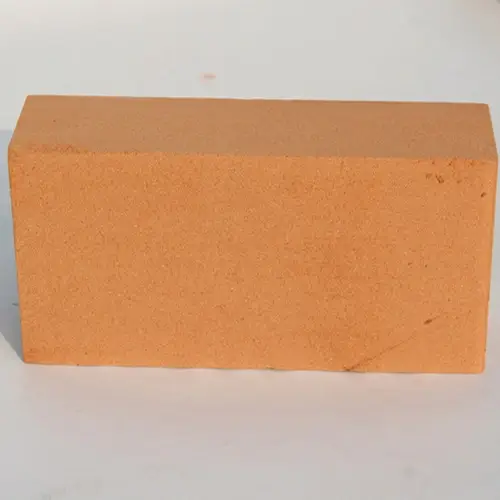
4.Alkaline Refractory Raw Materials
4.1 Magnesium-bearing Raw Materials
(1) Magnesite
There are two main types of magnesite in China: crystalline magnesite and amorphous magnesite. Magnesite deposits in China are primarily distributed in the provinces of Liaoning and Shandong. The main impurity in Chinese magnesite is talc, though some deposits contain relatively high levels of CaO, with dolomite being the secondary mineral. Based on chemical composition, Chinese magnesite is classified into five grades: S, I, II, III, and IV. Only grades S and I are used for calcination to produce magnesia bricks.
High-purity magnesia is produced using a two-stage flotation process and a two-stage calcination process. Using this high-purity magnesia as a raw material, a variety of high-performance refractory products can be developed.
(2) Other Magnesium-Containing Minerals
Among magnesium-based refractory products, magnesian olivine products consist primarily of magnesian olivine (2MgO·SiO₂) and periclase (MgO). These products are characterized by strong resistance to molten iron oxide and superior thermal shock stability compared to ordinary magnesia bricks. The main raw materials for producing these products are olivine rock and serpentine.
4.2 Dolomite-Based Raw Materials
Dolomite is a refractory raw material primarily composed of a double salt of magnesium carbonate (MgCO₃) and calcium carbonate (CaCO₃). Its chemical formula is CaMg(CO₃)₂ or MgCO₃ • CaCO₃, with a theoretical composition of CaO 0.41%, MgO 1.87%, and CO₂ 47.72%. The CaO/MgO ratio is 1.39, and its hardness ranges from 3.5 to 4.
5.Raw Materials for Zirconia Products
(1) Zircon
Zircon (ZrO₂·SiO₂ or ZrSiO₄) is the primary raw material for the production of zirconium-based products and zircon products. In China, zircon is primarily mined in Hainan Province. It is also found in Guangdong Province, the Guangxi Zhuang Autonomous Region, Shandong Province, Fujian Province, and Taiwan Province.
The theoretical composition of zircon is 67.01% ZrO₂ and 32.99% SiO₂. It often contains Ti, C, Fe, and other trace rare earth oxides; the presence of these elements imparts varying degrees of radioactivity to the material. Therefore, necessary protective measures should be taken when using this raw material to manufacture products.
Zircon has a low thermal conductivity, ranging from 3.72 W/(m·K) between 20 and 1,000 °C. Its coefficient of thermal expansion is also lower than that of other crystalline phases, standing at 4.6 × 10⁻⁶ °C at 1,000 °C; its single crystals exhibit significant differences in the coefficient of thermal expansion in the directions perpendicular to and parallel to the principal axis (C-axis). Zircon is highly chemically inert and does not readily react with acids. It reacts only to a limited extent with molten glass and is commonly used in refractory materials for the metallurgical and glass industries.
(2) Zircon
Natural zircon (ZrO₂) typically occurs as irregular lumps and is black, brown, yellow, or colorless. There are very few natural zirconite ore bodies in China. The ZrO₂ used industrially is a chemical raw material—a white or slightly yellowish powder produced chemically from zircon (ZrO₂·SiO₂).
Pure ZrO₂ has three crystal forms at atmospheric pressure: monoclinic, tetragonal, and cubic, in that order from low to high temperature.
Stable ZrO₂ is further classified into partially stable ZrO₂ and fully stable ZrO₂ based on its degree of stability. Since fully stable ZrO₂ has a higher coefficient of thermal expansion, its thermal shock stability is inferior to that of partially stable ZrO₂; therefore, the latter is often used as a toughening agent in ceramics and refractory materials.
(3) Desiliconized Zirconia
In the manufacture of fused zirconia-alumina (AZS) refractories abroad, in addition to using zircon concentrate, a certain amount of “desiliconized zirconium” is typically added. The purposes of this are: first, to adjust and stabilize the formulation; and second, to improve and optimize product performance.
(4) Zirconia-Alumina Mullite
The raw materials consist of industrial alumina, kaolin, and zircon. These are finely ground and thoroughly mixed, then pelletized using a semi-dry process and sintered at temperatures ranging from 300 to 1,700°C to produce this material. Research indicates that increasing the zircon content leads to a higher sintering temperature, reduced total shrinkage, and an increase in closed pores. These effects result in sintered zirconia-alumina mullite having higher density and strength, as well as better thermal shock resistance.
6.Raw Materials for Chromium Products
One of the main raw materials for producing chromium-based refractories (chromium bricks, chromium-magnesium bricks, and magnesium-chromium bricks) is chromite or chromite ore. Chromite ore is a mixture of various minerals; due to significant fluctuations in its mineral composition, it exhibits wide variations in both chemical composition and physical properties. It typically consists of gangue minerals containing chromium-bearing grains. These gangue minerals are usually magnesium silicates, such as serpentine, magnesium olivine, and olivine. In addition to Cr₂O₃, chromite also contains Al₂O₃, Fe₂O₃, and MgO. Due to the presence of magnesium and iron, typical chromite is often represented as (Mg, Fe)Cr₂O₃.