Shougang Qiangang currently operates five 210-metric-ton converters, as well as refining equipment such as CAS, LF, and RH units. Its product range includes pipeline steel, automotive steel, ship plate steel, silicon steel, and many other grades. Prior to 2009, Shougang Qiangang had consistently used internal-type permeable bricks for its ladles. When producing low-end steel grades or when bottom-blowing performance requirements were not particularly stringent, the service life typically reached about 38 cycles, which met production process needs. As the quality of slab steel grades continued to improve, and to meet the process requirements for desulfurization and alloying while significantly enhancing the blow-through performance of the permeable bricks, a bottom-blow purging process was introduced. However, this purging process led to accelerated erosion and spalling of the vent bricks and their base bricks, compromising the operational safety of both the vent bricks and the ladle lining bricks. The drawbacks of internally mounted vent bricks gradually became apparent, emerging as the primary obstacle hindering the development of refractory materials for Shougang Qiangang’s ladles. This paper focuses on the practical application of externally mounted vent bricks in Shougang Qiangang’s ladles, as well as the technical measures implemented to ensure safety.
Overview of the Application of Steel-Backed Permeable Pavers
After continuous casting is completed and the ladle returns to the hot repair station, the air-permeable bricks are typically purged based on the results of an air permeability test to ensure their success rate and bottom-blowing effectiveness for the next use. Since Shougang Qiangang adopted the air-permeable brick purging process, the success rate has increased from approximately 90% to over 99%, which largely meets the requirements for high-quality steel grades. However, this has reduced the service life of the permeable bricks from approximately 38 cycles to about 22 cycles, while their residual thickness has decreased from about 220 mm to 160–180 mm. This has compromised the safety of the permeable bricks and significantly impacted the stable turnover of the ladles.
To ensure effective gas injection while maintaining the safety of the permeable bricks’ service life and residual thickness, the height of the permeable bricks was increased in 2008, and adjustments were made to the ladle bottom lining repair process and the ladle rotation process. As a result, the residual thickness of the permeable bricks recovered to 180–200 mm, the service life for bottom gas injection stabilized at around 24 cycles, and the success rate stabilized at over 99%. However, the 24-blow service life of the internally mounted permeable bricks still does not align with the scheduled maintenance frequency of the corresponding ladle lining. Replacing the permeable bricks requires removing the ladle from normal rotation, which adversely affects the service life of the working lining, the efficiency of hot rotation, and the stability of ladle rotation to varying degrees. Therefore, enabling online hot replacement of permeable bricks has become an essential requirement for optimizing the bottom-blowing brick operation process.
A Comparison of Exterior and Interior Breathable Bricks
2.1 Overall Structure and Installation Features
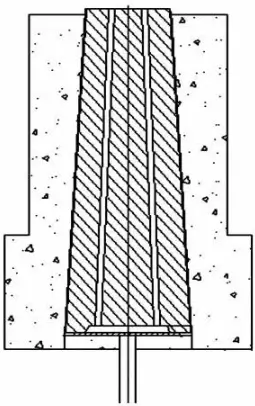
For internal-type vent bricks, the brick core and base brick are pre-assembled into a single unit before arriving at the factory. During ladle lining, they are installed from inside the ladle without the need for any auxiliary equipment, as shown in Figure 1.
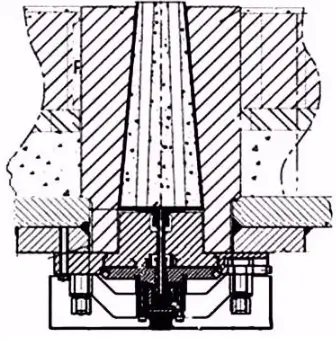
For externally installed vent bricks, the brick core and base brick are separate and require specialized auxiliary equipment to ensure safe use. The structure of externally installed vent bricks primarily consists of four parts: the bottom-blow mechanism, spacer bricks, vent base bricks, and vent brick cores, as illustrated in Figure 2.
For externally mounted vent bricks, the base brick is installed from inside the ladle during the ladle lining process, while the vent brick core is installed from the outside of the ladle. After the vent brick core is installed, a spacer brick is placed beneath it and secured in place by the bottom-blowing mechanism.
2.2 Gas Supply Methods
Although the structural designs of internally ventilated bricks and externally ventilated bricks differ, there is no significant difference in their air supply methods. Currently, the main air supply methods include slit-type, plate-type, and ring-seam-type.
2.3 Maintenance Methods
When the core of an internal-type vent brick is severely eroded or when bottom blowing is consistently impaired, a “tilt-out” procedure must be performed. This involves removing the vent seat brick and its core once the temperature of the ladle lining has dropped to a level tolerable for operators, and then laying new bricks; In contrast, for externally mounted vent bricks, the brick cores can be replaced while the ladle is still hot; the vent seat bricks do not need to be replaced. Once the brick core replacement is complete, the externally mounted vent bricks can be put into service immediately without the need for additional drying or baking.
Physical and Chemical Properties of Refractory Materials for Ventilation Systems
Currently, Shougang Qiangang’s 210-metric-ton ladle uses externally mounted vent bricks with a plate-shaped, slotted vent brick core. Unlike internally mounted vent bricks, due to erosion and hole enlargement caused by purging during operation, the gap between the newly installed vent plug and the vent seat brick must be filled with a specialized hot-repair material. The typical physical and chemical properties of the vent seat brick, vent brick core, and specialized hot-repair material are shown in Table 1.
Problems Encountered in the Practical Application of Exterior Breathable Bricks
Since this marks the first application of externally mounted vent bricks on Shougang Qiangang’s 210-metric-ton ladle—and such bricks are rarely used in 200-metric-ton or larger ladles at steel mills across China—there is relatively little prior experience to draw upon. Based on Qiangang’s operational experience over the past few years, the following situations require special attention.
(1) Failure to pull out the vent brick core during a hot replacement, resulting in extended replacement time. Under normal operating conditions, when using a specialized extraction tool to remove the external vent brick core, improper operation can cause the outer metal sheath of the core to tear, leaving part of the core lodged inside the seat brick. This necessitates the use of tools such as a pneumatic chisel to remove the core from the outside of the ladle, resulting in bottom-blow replacement operations lasting more than three hours.
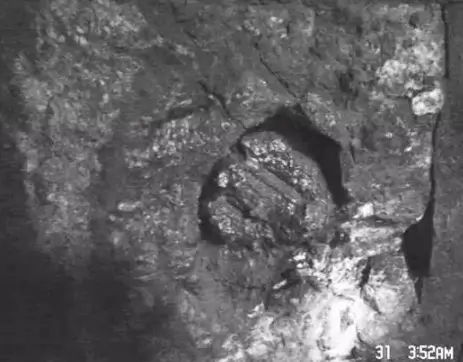
(2) Damage to the vent seat brick caused by purging operations. During hot repairs, purging and cleaning the vent core causes it to erode faster than the vent seat brick, causing it to sink into the seat brick. Once the base brick loses its connection with the core, its interior cavity comes into direct contact with the molten steel. During operation, it is subjected to repeated thermal shocks from the circulating molten steel, making it prone to fracture. This creates a safety hazard where molten steel may leak through the bottom of the ladle, and simultaneously allows the injected argon gas to escape through the fracture, thereby reducing the effectiveness of the bottom-blowing process and disrupting normal operational procedures. A cross-section of the fractured base brick is shown in Figure 3.
(3) The service life of the permeable brick core does not align with the ladle maintenance schedule, resulting in increased consumption of the permeable brick core. The maintenance schedule for Shougang Qiangang’s 210-metric-ton carbon-free ladle is as follows: 48 ladle runs → 72 ladle runs → 96 ladle runs → 120 ladle runs. Specifically, the ladle bottom bricks are replaced after 48 ladle runs, the slag line bricks after 72 ladle runs, the ladle bottom bricks again after 96 ladle runs, and the ladle is taken offline for intermediate repairs after 120 ladle runs. Since the service life of permeable brick cores replaced during hot replacement is relatively shorter than that of those installed in a new ladle bottom, and given that the ladle bottom service life is set at 48 ladle runs, each permeable seat brick uses an average of ≥3 permeable brick cores. This results in excessive consumption of permeable brick cores, preventing the external-mount permeable brick technology from achieving its full potential. Analysis of extensive on-site statistics regarding the service life and residual thickness of permeable brick cores (see Table 2) revealed that permeable brick cores installed in newly built ladle bottoms have a relatively longer service life, whereas those replaced during hot replacement have a relatively shorter service life. This has a certain impact on the overall turnover of the ladle; it also increases the consumption of permeable brick cores, with an average consumption of more than 14 per ladle and a maximum of 18.
(4) Errors in assessing the purging of the permeable brick core can affect the effectiveness of bottom purging. Due to variations in the manufacturing quality of the permeable brick cores and the impact of on-site purging operations, insufficient gas flow through the permeable brick core may occur when the ladle enters the refining station. This makes it difficult to meet the requirements of the refining process, forcing the molten steel to be transferred to another ladle for further processing. This disrupts the normal production rhythm and increases production costs.
Improvement Measures and Results
In response to various issues that arose during the use of externally mounted permeable bricks, a series of improvement measures were formulated through enhanced on-site management, yielding significant results.
(1) To address the failure to pull out the air-permeable brick core during hot replacement and the lengthy replacement process, it is now required that, when replacing the air-permeable brick core, residual steel and slag adhering to the core’s surface be thoroughly blown away, and the refractory mortar adhering to the back of the core be completely removed. Before pulling, the air-permeable brick core must be tapped, and the strength of the steel shell at the bottom of the core must be enhanced. These measures have significantly improved the success rate and efficiency of pulling during bottom-blow replacement.
(2) To address the purging of bottom-blow bricks, operating procedures for purging permeable bricks have been established, setting clear requirements for gas flow rate, purging angle, and purging duration, thereby enhancing operators’ ability to identify fractures and blockages in bottom-blow bricks.
(3) Measures to align the service life of the vent bricks with maintenance schedules. For localized pits that appear on the vent brick cores during use, repairs are promptly carried out by applying repair material to ensure the vent bricks operate safely.
(4) In response to issues arising during the on-site use of vent bricks, the “Vent Brick Usage Management Requirements” were established to standardize on-site management by suppliers and strengthen communication and coordination between suppliers and ladle preparation operators. A detailed dynamic inspection log for permeable bricks has been established to promptly identify issues during use and quickly determine appropriate solutions.
Through these technical improvements and management enhancements, Shougang Qiangang’s external-type permeable bricks now achieve a blowing success rate of over 99.9%, with a 100% success rate for core extraction, and have significantly reduced the time required for hot replacement. The service life of the breather brick cores has stabilized at 24 to 28 cycles, with a residual thickness exceeding 200 mm, thereby reducing breather brick consumption. The occurrence of breather seat brick fractures has been eliminated, significantly improving the operational safety of externally mounted breather bricks. Additionally, over the past four years since the improvements were implemented, the service life of the externally mounted breather bricks has been well aligned with the ladle lining maintenance schedule, laying the foundation for further extending the service life of the ladles.