1.What are the principles for formulating refractory castables?
The formulation design of refractory castables consists of two parts: application design parameters and material design parameters. When using refractory castables under specified target conditions, factors such as raw material composition, manufacturing techniques, material installation (construction), and application techniques must be considered. The goal of formulation design is to strike a balance between material performance and application conditions. Typically, the type and quality of refractory materials for a furnace lining are determined based on the actual operating conditions of the furnace (operating temperature, furnace atmosphere, and exposure to dust, steam, liquids, and/or slag) as well as the characteristics of the molten slag. If refractory castables are selected as the target lining, materials suitable for the operating conditions, appropriate bonding systems, and additives that further improve and enhance performance should be chosen to produce refractory castables with superior performance.
2. How are refractory castables classified?
Unshaped refractory materials, commonly referred to as refractory castables or loose refractories, are a type of refractory material composed of refractory aggregates and powdered materials with a specific gradation, mixed with binders and additives, and used directly without undergoing molding or firing processes.
Refractory castables are refractory mixtures composed of refractory aggregates, fine powders, additives, and binders, produced through batching and mixing. As a new type of refractory material, they do not require high-temperature firing; instead, they are used directly after curing during installation. They feature a simple production process, energy and labor savings, suitability for mechanized construction, good structural integrity, ease of repair, and a long service life.
Refractory castables are typically classified based on porosity, the type of binder or bonding method used, the type of aggregate, and the application method.
By porosity, they can be divided into dense refractory castables and insulating refractory castables.
Based on the bonding method, refractory castables can be classified into four major types: hydration-bonded refractory castables, chemically bonded (including polymer-bonded) refractory castables, refractory castables with combined hydration and polymer bonding (typically represented by low-cement refractory castables), and coagulation-bonded refractory castables.
Based on the binder and the specific functions of certain materials, they can be classified into the following seven categories:
(1) Clay-bonded refractory castables;
(2) Ultrafine powder (e.g., silica fume) bonded refractory castables;
(3) Cement-bonded refractory castables;
(4) Chemically bonded refractory castables;
(5) ρ-Al₂O₃ (hydrated Al₂O₃) bonded refractory castables;
(6) Low-cement bonded refractory castables;
(7) Silica and alumina sol-gel-bonded refractory castables.
Based on their raw material composition, refractory castables can be classified into oxide-based refractory castables, non-oxide-based refractory castables, and composite refractory castables. Oxide-based refractory castables can be further subdivided into non-alkaline refractory castables and alkaline refractory castables.
Based on the method of application, refractory castables can be broadly classified into two categories: vibration-applied refractory castables and self-flowing refractory castables.
Based on whether the refractory castable contains cementitious components or CaO content, they can be broadly classified into four categories: ordinary refractory castables, low-cement refractory castables, ultra-low-cement refractory castables, and cement-free refractory castables.
Refractory castable components or monolithic linings are produced using processes such as vibrating tables, vibrators, vibration-compaction molding, or self-flowing casting.
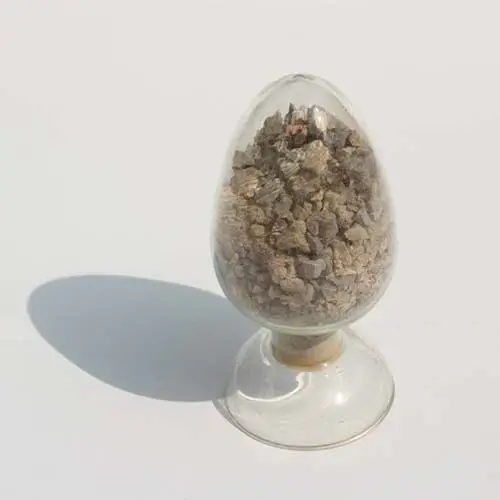
3. What are the common refractory raw materials used in refractory castables?
(1) Sintered corundum. Sintered corundum, also known as sintered alumina or semi-fused alumina, is a refractory clinker produced by grinding calcined alumina or industrial-grade alumina into fine particles or green bodies, which are then sintered at high temperatures of 1750–1900°C. Sintered alumina containing more than 99% aluminum oxide is typically composed of uniformly distributed fine-grained corundum particles directly bonded together. It has a porosity of less than 3.0%, a bulk density of 3.60 g/cm³, and a refractoriness approaching the melting point of corundum. It exhibits good volumetric and chemical stability at high temperatures, is resistant to erosion by reducing atmospheres, molten glass, and molten metals, and possesses good mechanical strength and wear resistance at both room and high temperatures.
(2) Electrofused corundum. Electrofused corundum is a synthetic corundum produced by melting pure alumina powder in a high-temperature electric furnace. It features a high melting point, high mechanical strength, good thermal shock resistance, strong resistance to erosion, and a low coefficient of linear expansion. Electrofused corundum serves as a raw material for manufacturing high-grade specialty refractory materials. It primarily includes electrofused white corundum, electrofused brown corundum, and semi-white corundum.
(3) Electrofused white corundum. Electrofused white corundum is produced by melting pure alumina powder at high temperatures and appears white. The smelting process of white corundum is essentially one of melting and recrystallization of industrial alumina powder, with no reduction process involved. Its Al₂O₃ content is no less than 9%, and it contains very few impurities. Its hardness is slightly lower than that of brown corundum, and its toughness is somewhat lower. It is commonly used in the manufacture of abrasives, special ceramics, and high-grade refractory materials.
(4) Electro-fused brown fused alumina. Electro-fused brown fused alumina is produced by melting high-alumina bauxite, mixed with coke (anthracite), in an electric furnace at temperatures exceeding 2000°C. It features a dense texture and high hardness, and is commonly used in ceramics, precision casting, and high-grade refractory materials.
(5) Semi-white corundum. Semi-white corundum is produced by electrofusing premium-grade or first-grade bauxite under reducing atmospheres and controlled conditions. During melting, reducing agents (carbon), settling agents (iron filings), and decarburizing agents (iron scales) are added. Because its chemical composition and physical properties are similar to those of white corundum, it is called semi-white corundum. With a bulk density of 3.80 g/cm³ or higher and an apparent porosity of less than 4%, it is an ideal material for manufacturing high-grade refractories and wear-resistant materials.
(6) Mullite. Mullite is a refractory material with 3Al₂O₃·2SiO₂ as its primary crystalline phase. Natural mullite is extremely rare; it is typically synthesized artificially using methods such as sintering or electrofusion. Mullite is characterized by uniform expansion, good thermal shock resistance, a high load-softening point, low high-temperature creep, high hardness, and good resistance to chemical corrosion.
(7) Zirconia-Alumina-Mullite. Zirconia-alumina-mullite is synthesized from industrial alumina, kaolin, and zircon as the main raw materials, which are finely ground, uniformly mixed, semi-dry pressed into pellets, and then sintered at high temperatures of 1600–1700°C. Increasing the zircon content raises the sintering temperature, reduces total shrinkage, and increases pore sealing. These effects result in sintered zirconia-alumina mullite possessing high density and strength, as well as excellent thermal shock resistance and slag resistance.
(8) Magnesium-aluminum spinel. Magnesium-aluminum spinel is synthesized through high-temperature sintering or electric fusion using industrial alumina and calcined magnesium oxide as raw materials. The chemical formula of magnesium-aluminum spinel is MgO·Al₂O₃, with a MgO content of 28.2% and an Al₂O₃ content of 71.8%. It offers advantages such as high-temperature resistance, wear resistance, corrosion resistance, a high melting point, low thermal expansion, low thermal stress, good thermal shock stability, strong resistance to alkaline slag erosion, and excellent electrical insulation properties.
(9) Silicite, Andradite, and Kyanite. The chemical formula is Al₂O₃·SiO₂, with a theoretical composition of 63.1% Al₂O₃ and 36.9% SiO₂. Upon heating, they irreversibly transform into mullite and cristobalite. They offer excellent resistance to slag erosion, good thermal shock stability, and a high load-softening point. Minerals of the kyanite group serve as high-quality raw materials for unshaped refractories. Due to their minimal volume change during heating, sillimanite and andalusite can be directly used to manufacture bricks or as refractory aggregates; Kyanite undergoes significant volume expansion upon heating; when used as an expansion agent in unshaped refractory materials, it can be used directly.
(10) High-alumina bauxite. China’s high-alumina bauxite resources are primarily distributed in Shanxi, Henan, Guangxi, and Guizhou. High-alumina bauxite clinker, produced through high-temperature calcination, is mainly used in high-alumina refractory materials and can also be used to manufacture fused brown corundum and sub-white corundum. In recent years, homogenized bauxite clinker produced in China has achieved good results in the application of unshaped refractory materials due to its low absorption rate and stable performance.
(11) Soft clay. The mineral composition of soft clay consists primarily of kaolinite or hydrated kaolinite, mixed with other impurity minerals. Its Al₂O₃ content ranges from 22% to 38%, with an average refractoriness of approximately 1600°C. Soft clay typically appears earthy in texture, with fine particles that disperse easily in water, and exhibits strong plasticity and binding properties. It is widely used in plastic refractories, ramming mixes, spray linings, refractory slurries, and medium- to low-grade refractory materials.
(12) Clay Clinker. Depending on the raw materials and production methods used, refractory clay clinker can be divided into two types: one is produced by directly calcining hard clay blocks in a kiln; the other is produced by finely grinding, homogenizing, filter-pressing to remove water, and drying kaolin or hard clay, followed by firing in a kiln, resulting in high-quality clay sintered material. The primary mineral phase in hard clay sintered material is mullite, accounting for 35%–55%, followed by the glass phase and cristobalite. Clay sintered material is the main raw material for ordinary aluminosilicate refractories.
(13) Magnesite. Magnesite is a natural alkaline mineral raw material primarily composed of magnesium carbonate (MgCO₃). China is rich in magnesite resources, which are of high quality and have large reserves. Magnesite is mainly distributed in Liaoning Province. It is primarily used as a raw material for the production of sintered magnesia, fused magnesia, and alkaline refractory materials.
(14) Sintered magnesia. Sintered magnesia is produced by thoroughly sintering magnesite at temperatures of 1600–1900°C; its primary mineral is periclase. High-quality magnesia typically has an MgO content of over 95% and a bulk density of no less than 3.30 g/cm³, and it exhibits excellent resistance to alkali slag erosion. Sintered magnesia is one of the primary raw materials for the production of alkaline refractories.
(15) Fused magnesia. Fused magnesia is produced by melting carefully selected magnesite or sintered magnesia in an electric arc furnace at temperatures exceeding 2500°C. Compared to sintered magnesia, the primary crystalline phase, periclase, has coarse grains that are in direct contact; it features high purity, a dense structure, strong resistance to alkaline slag, and good thermal shock stability, making it an excellent raw material for high-grade carbon-containing unshaped bricks and unshaped refractory materials.
(16) Silicon carbide. Silicon carbide is typically produced by high-temperature smelting in an electric furnace using a mixture of coke and silica sand as the main raw materials. At temperatures between 1400 and 1800°C, β-SiC (cubic crystal) is formed, while at temperatures above 1800°C, α-SiC (hexagonal crystal) is formed. Silicon carbide possesses high hardness, high thermal conductivity, low thermal expansion, and excellent resistance to neutral and acidic slags. Commercial silicon carbide typically contains 90%–99.5% SiC; refractory castables, spray linings, ramming mixes, and plastic refractories often utilize silicon carbide of higher purity.
(17) Silica fume. Silica fume is a byproduct of ferrosilicon and silicon product manufacturing. It appears as a fine powder ranging from white to dark gray, with spherical particles typically measuring 0.02–0.45 μm in diameter. It has a specific surface area of approximately 15–25 m²/g and a bulk density of 0.15–0.25 g/cm³. In recent years, some silica fume has become a primary product rather than a byproduct. It is highly pure, white in color, and has a stable composition. Its application in self-flowing castables demonstrates excellent rheological properties.
(18) Graphite. Graphite is classified into synthetic graphite and natural graphite. Synthetic graphite is produced through two methods: sintering petroleum coke (heated to temperatures above 2800°C) or using the graphite electrode process. Natural graphite crystals belong to the hexagonal crystal system with rhombohedral symmetry. They typically exist in three forms: amorphous, flake graphite, and pure crystalline graphite. Amorphous graphite (formless) and synthetic graphite exhibit superior flowability compared to flake graphite and crystalline graphite in applications involving castables and refractory materials.
(19) Asphalt. Coal tar asphalt has a higher residual carbon content than petroleum asphalt, and both can effectively provide a carbon component to refractory materials. Depending on the formulation requirements, it can be used in either fine powder or granular form. In unshaped refractory applications, bitumen is preferred over other forms of carbon (such as graphite) because its low melting point allows it to coat the particles, thereby providing an effective protective layer against slag erosion.
(20) Calcium aluminate cement. The primary method for producing high-alumina cement is sintering. Relatively pure limestone serves as the calcium oxide raw material for all calcium aluminate cements, while sintered alumina is used to produce high-grade calcium aluminate cement, and low-iron, low-silica bauxite is used as the alumina raw material for medium- and low-grade high-alumina cements. Pure calcium aluminate cement or high-alumina cement is the most important hydraulic cement used as the binding phase in refractory castables and spray linings. During the construction of refractory castable linings, water temperature, water content, mixing intensity, mixing time, temperature, and heating rate must be strictly controlled. Among these, temperature is the most critical parameter, as it significantly affects the formation of the cementitious phase and the release of moisture during the initial heating phase.
(21) Silica sol. Silica sol is an aqueous colloid containing dispersed silica particles; it is a milky-white liquid that feels slightly viscous to the touch and possesses a high specific surface area. Silica sol can be set through dehydration, pH adjustment, or the addition of salts or water-miscible organic solvents. During drying, rapid dehydration forms siloxane (Si—O—Si) bonds on the particle surfaces, leading to polymerization and internal bonding. The transformation of silica sol from a solution to a solid is generally referred to as setting. It is commonly used in coatings, castables, pumped materials, ramming mixes, and spray-applied repair materials.
(22) Sodium silicate. Common silicates include sodium silicate (Na₂O·mSiO·nH₂O), potassium silicate, and lithium silicate. The anhydrous form of sodium silicate is typically transparent like glass and soluble in water, hence it is also known as water glass. In industrial products, the molar ratio of SiO₂ to Na₂O (known as the water glass modulus) ranges from 0.5 to 4.0; for refractory applications, the molar ratio of sodium silicate is 2.2 to 3.35. The viscosity of an aqueous sodium silicate solution is influenced by its molar ratio and concentration, and varies significantly with temperature. Sodium silicate undergoes hydration in aqueous solution, and the solution is alkaline. The lower the molar ratio, the more pronounced the hydration of sodium silicate, and the pH decreases as the molar ratio decreases. Sodium silicate with a higher molar ratio undergoes a slower hydration reaction. The selection of a curing agent for sodium silicate-bonded refractory materials must be determined based on the application of the refractory material. Commonly used curing agents include sodium fluorosilicate, polyaluminum chloride, phosphoric acid, sodium phosphate, polyaluminum phosphate, magnesium polyphosphate, ammonium pentaborate, glycolaldehyde, citric acid, tartaric acid, and ethyl acetate.
(23) Phosphoric Acid and Phosphates
Orthophosphoric acid itself has no binding properties. However, when it comes into contact with refractory materials, a rapid reaction occurs between the two to form phosphates, which is what gives it good binding properties. Various forms of phosphates can be used as binders. The most commonly used salt in refractory materials is aluminum phosphate; as a binder, aluminum dihydrogen phosphate is renowned for its solubility in water, bonding strength, and stability. Sodium phosphate is primarily used in refractory materials for agglomeration, deagglomeration, and as a binder in alkaline spray mixes. Sodium polyphosphate is often used as a water-reducing agent in castables. Additionally, sodium phosphate can react with alkaline earth metal compounds (such as CaO and MgO) to induce sintering. It is precisely this property of sodium phosphate that makes it suitable for use in magnesium-based alkaline spray linings.
(24) ρ-Al₂O₃
ρ-Al₂O₃ is a form of active alumina. Unlike other crystalline forms of Al₂O₃, it is the least crystalline variant of Al₂O₃. Among the various crystalline forms of Al₂O₃, only ρ-Al₂O₃ undergoes spontaneous hydration at room temperature; the alumina trihydrate and boehmite sol generated by this process serve as binders and hardeners. At high temperatures, ρ-Al₂O₃ ultimately transforms into α-Al₂O₃ (corundum), an excellent refractory material. Therefore, this ρ-Al₂O₃-bonded castable can be regarded as a self-bonding refractory castable; it serves as a binder while also being a high-grade refractory oxide itself, possessing clearly superior properties.
4. What are the commonly used binders for refractory castables?
During the production or use of unshaped refractory materials (refractory castables), other materials are often added. A binder is a substance that binds together loose refractory materials composed of coarse aggregates and powders; it is therefore also referred to as a “setting agent” or “adhesive.”
Based on their chemical properties, binders are classified as organic or inorganic.
Inorganic binders:
(1) Silicate-based—calcium silicate cement, water glass, binding clay, etc.; (2) Aluminate-based—ordinary calcium aluminate cement, pure calcium aluminate cement, barium aluminate cement, etc.; (3) Phosphate-based—phosphoric acid, aluminum dihydrogen phosphate, sodium tripolyphosphate, sodium hexametaphosphate, aluminum chromium phosphate, etc.; (4) Sulfate-based—magnesium sulfate, aluminum sulfate, iron sulfate, etc.; (5) Chloride-based—magnesium chloride, iron chloride, polyaluminum chloride, etc.; (6) Sol-based—silica sol, aluminum sol, silica-aluminum sol, etc.
Organic Binders:
(1) Natural organic compounds—starch, dextrin, gum arabic, paper pulp waste liquid, tar, asphalt, sodium alginate, etc.
(2) Synthetic organic compounds—epoxy resins, linear phenolic resins, methyl phenolic resins, polystyrene, ethyl silicate, polyurethane resins, etc.
Classified by binder curing conditions:
(1) Hydraulic binders—silicate cement, aluminate cement, etc.; (2) Gas-hardening binders—sodium fluorosilicate with water glass, magnesium oxide with phosphoric acid or aluminum dihydrogen phosphate, calcium aluminate cement with micro-silica, etc.; (3) Thermosetting binders—phosphoric acid, aluminum dihydrogen phosphate, methylene-phenolic resins, etc.
Classified by bonding action at different temperatures into temporary and permanent binders.
Temporary binders:
(1) Water-soluble binders—dextrin, powdered carboxymethyl cellulose, powdered and liquid lignin sulfonate materials, polyvinyl alcohol powder crystals, etc.; (2) Non-water-soluble binders—hard asphalt, paraffin, polypropylene, etc.
Permanent binders:
(1) Carbon binders—tar asphalt, phenolic resins, etc.; (2) Aluminate cement; (3) Silicate binders—water glass, ethyl silicate, etc.; (4) Phosphoric acid and phosphate binders; (5) Chloride and sulfate binders.
5. What are the different types of bonding methods for binders?
(1) Hydration bonding—bonding formed through the hydration reaction between a binder and water at room temperature, resulting in the formation of hydration products. For example, when calcium aluminate cement reacts with water, it undergoes hydration to form hexagonal plate-like or needle-like CaO·Al₂O₃·10H₂O and 2CaO₂·Al₂O₃·8H₂O crystals, as well as cubic granular 3CaO·Al₂O₃·6H₂O crystals and an alumina gel. These form a cohesive crystalline network, thereby producing bonding.
(2) Chemical bonding—Bonding is achieved through chemical reactions occurring at room temperature between the binder and a hardener, or between the binder and the refractory material, or through chemical reactions occurring upon heating that produce compounds acting as binders.
(3) Polymerization Bonding—Bonding strength is achieved by inducing the binder to undergo condensation polymerization to form a network structure, aided by a catalyst or cross-linking agent. For example, when an alpha-phenolic resin is treated with acid as a catalyst or heated, the following condensation reaction occurs, resulting in good bonding strength:
(4) Ceramic Bonding—This refers to low-temperature sintering bonding, wherein additives or metal powders that lower the sintering temperature are added to loose refractory materials to significantly reduce the temperature at which the liquid phase appears, thereby promoting solid-liquid reactions at low temperatures to achieve low-temperature sintering bonding. For example, when a small amount of boron trioxide is added to dry-vibro-compacted corundum mixes, boric anhydride forms a viscous liquid phase at 450–550°C, which subsequently reacts with α-Al₂O₃ in a liquid-solid reaction to form compounds with higher melting points, such as 9Al₂O₃·2B₂O₃ (melting point 1035°C) and 9Al₂O₃·2B₂O₃ (melting point 1950°C), thereby consolidating the corundum aggregates.
(5) Adhesive Bonding (Adhesion) — Bonding occurs through one of the following physical mechanisms: 1) Physical adsorption: Bonding occurs due to intermolecular forces—van der Waals forces; 2) Diffusion: Under the influence of the thermal motion of molecules, the molecules of the binder and the substrate undergo mutual diffusion, forming a diffusion layer and thereby creating a strong bond; 3) Electrostatic interaction: A double layer exists at the interface between the binder and the substrate, and bonding occurs due to the electrostatic attraction within this double layer.
Most binders used to create adhesive bonds are organic binders. Some are temporary binders that burn off after high-temperature treatment, such as dextrin and carboxymethyl cellulose. Others are permanent binders; after high-temperature treatment, except for some volatiles, the remainder carbonizes to form a carbon bond, such as organic binders like asphalt and phenolic resins. There are also some inorganic binders that exhibit adhesive properties, such as aluminum dihydrogen phosphate, water glass, and silica sol.
(6) Coagulation bonding—relies on the addition of a coagulant to cause the aggregation of microparticles (colloidal particles), thereby creating a bond.
6.What are the properties and functions of coagulants?
Substances that promote the setting and hardening of refractory castables are called setting accelerators. The mechanism of action of setting accelerators is relatively complex and varies depending on the properties of the binder and the accelerator used. Different binders require accelerators with different properties. For example, accelerators used in calcium aluminate cement-based castables are mostly alkaline compounds: NaOH, KOH, Ca(OH)₂, Na₂CO₃, K₂CO₃, Na₂SiO₃, K₂SiO₃, triethanolamine, etc.; For castables bonded with phosphoric acid or aluminum dihydrogen phosphate, the accelerators used include active aluminum hydroxide, talc, NH₄F, magnesium oxide, calcium aluminate cement, and basic aluminum chloride; For sodium silicate (water glass)-bonded castables, the setting accelerators include sodium fluorosilicate, aluminum phosphate, sodium phosphate, metallic silicon, lime, dicalcium silicate, polyaluminum chloride, and glycolaldehyde, among others.