Refractory materials fall under the category of inorganic non-metallic materials and serve as indispensable foundational materials for high-temperature industries. They are primarily applied in sectors such as steel, building materials, non-ferrous metals, machinery, and petrochemicals. The advancement of these industries is inseparable from progress in refractory materials. The refractory materials industry has become a fundamental pillar supporting China’s national economic development, safeguarding the sustained and stable growth of high-temperature industries. Over the past two decades, China’s refractory industry has experienced rapid growth, establishing itself as the world’s largest producer, consumer, and exporter of refractory materials. The rising demand for refractories has directly stimulated the rapid development of upstream raw materials, with the reprocessing of these materials emerging as a key future development direction.
Refractories are primarily composed of inorganic non-metallic materials such as magnesia, bauxite, graphite, alumina, and silica, blended with specific additives in precise proportions. Inorganic non-metallic minerals find extensive application in the refractory sector, with the massive demand for refractories creating vast market opportunities for these materials.
The applications of common primary inorganic non-metallic minerals in refractories are outlined below.
1. High-alumina raw materials
High-alumina raw materials refer to aluminosilicate refractory materials with an alumina content of ≥48%, primarily including high-alumina bauxite, mullite, corundum, and kyanite group minerals. They constitute one of the most fundamental primary raw materials for refractory products.
1.1 High-Alumina Bauxite
High-alumina bauxite refers to natural bauxite ore with an alumina content exceeding 48% and relatively low iron oxide content after calcination. It serves as the primary raw material for producing high-alumina refractories. High-alumina bauxite can be applied to nearly all aluminosilicate refractories, with high-alumina bricks, clay bricks, high-alumina castables, and other products utilizing it as the fundamental base material. Among all refractory raw materials, it boasts the widest application and the largest consumption volume.
China possesses abundant bauxite resources, ranking among the world’s top reserves and standing as one of the three major exporters of alumina for refractory materials globally (China, Guyana, and Brazil). China’s bauxite deposits are highly concentrated, with four provinces/regions—Shanxi, Guizhou, Henan, and Guangxi—accounting for 90.9% of the nation’s total reserves (Shanxi: 41.6%, Guizhou: 17.1%, Henan: 16.7%, Guangxi: 15.5%). The remaining 15 provinces, autonomous regions, and municipalities with bauxite deposits collectively hold only 9.1% of the national total.
According to national standards for classifying high-alumina bauxite, the detailed specifications for raw bauxite ore (green material) and refractory-grade high-alumina bauxite (clinker) are as follows.
Despite China’s abundant bauxite reserves, both annual extraction and consumption volumes remain exceptionally high. Concurrently, national policy directives prioritizing high-alumina bauxite for alumina production have led to a growing shortage of refractory-grade high-alumina bauxite, constraining the development of the refractory industry. Utilizing lower-grade bauxite represents a key focus for future research. Reflecting on the development and experience of China’s high-alumina bauxite production technology, and grounded in the mining, processing, and application of China’s high-alumina bauxite resources, the necessity of homogenizing high-alumina bauxite is undeniable. This represents the future direction for the development of high-alumina bauxite resources.
1.2 Alumina-based raw materials
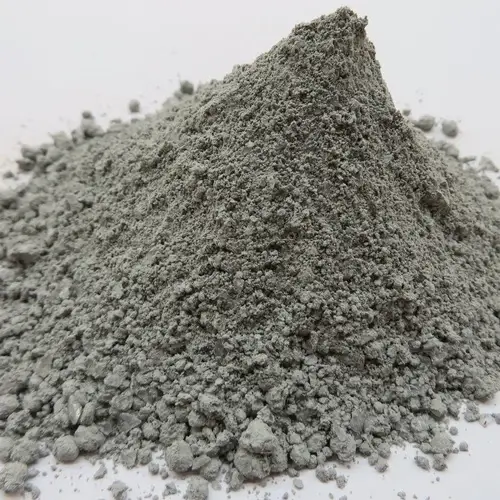
Alumina-based materials refer to substances primarily composed of alumina as the dominant crystalline phase, featuring high alumina content and belonging to the trigonal crystal system. These materials are produced through processes such as electric melting or sintering. Common examples include industrial alumina, sintered corundum, and fused corundum.
1.2.1 Industrial Alumina
Industrial alumina is produced by chemically treating bauxite ore to remove oxides such as silicon, iron, and titanium, resulting in a high-purity alumina raw material. It is primarily used in the matrix components of high-grade refractory materials that require high aluminum content, low impurity levels, and stringent performance specifications, such as electrically fused alumina bricks for the glass industry.
Alpha alumina micropowder is a product of industrial alumina calcination, processed through grinding to achieve a median diameter of 19 μm with high reactivity. Due to its fine particle size, large specific surface area, high surface activation energy, and strong reactivity, it is commonly used in unshaped refractories. Its primary functions include optimizing the matrix, promoting sintering, and enhancing construction properties such as flowability. It serves as one of the key media in ultrafine powder technology. It is also employed in shaped refractory products, where its primary functions include optimizing the matrix and promoting sintering.
1.2.2 Sintered Corundum
Sintered corundum refers to corundum produced via the sintering process, typically using industrial alumina as raw material, and includes a plate-shaped variety. Sintered alumina with an alumina content of 99.3–99.7%, true density ≥3.99 g/cm³, bulk density ≥3.439 g/cm³, and porosity ≤2% is generally recognized as sintered corundum for refractory applications. Sintered corundum offers advantages such as high purity, density, thermal conductivity, strength, and excellent thermal shock and erosion resistance. It is primarily used in the production of high-purity corundum products.
1.2.3 Electro-fused Corundum
Electrofused corundum comes in various types, including electrofused white corundum, electrofused dense corundum, electrofused semi-white corundum, and electrofused brown corundum, among others. The most commonly used type is electrofused white corundum. Electrofused corundum offers high purity, density, thermal conductivity, and strength, along with excellent corrosion resistance, acid and alkali resistance, volume stability at high temperatures, and low porosity. It is primarily used in the production of high-purity corundum products.
1.3 Mullite
The raw material for mullite used in the refractory industry is generally synthetic, as valuable natural mullite deposits are rare. Synthetic mullite is primarily produced through sintering and electric melting processes. Characterized by a high total alumina-silica content, low impurity levels, unique crystal morphology, and a low coefficient of thermal expansion, mullite is typically used in manufacturing medium-to-high-grade high-alumina refractories. It is suitable for demanding operating conditions within high-temperature kilns.
Sintering-synthesized mullite is produced using silica, kaolinite, high-alumina bauxite, and industrial alumina as raw materials. Following the theoretical composition formula for mullite, these materials undergo thorough mixing and grinding before being formed into green bodies. These are then calcined at high temperatures of 1700-1750°C in rotary kilns or shuttle kilns. Typically, the alumina content ranges from 65% to 75%. The mineral composition comprises 86% to 99% mullite phase, 0.5% to 10% corundum phase, and 0.2% to 10% glass phase.
Electrofused mullite is produced by mixing industrial alumina, high-quality sintered bauxite, high-purity silica, and other raw materials in specific proportions, then pouring the mixture into an electric arc furnace for melting and sintering. Its aluminum content is typically no less than 76%.
1.4 Raw Materials for the Blue Quartz Family
The kyanite group includes kyanite, andalusite, and sillimanite, all of which are polymorphs. During high-temperature phase transformations, kyanite group minerals undergo volume expansion. Incorporating these minerals into refractories leverages this volumetric change to counteract volume contraction during high-temperature firing. This prevents cracking in refractory products, achieves volumetric stability, and ultimately extends service life. Additionally, the high alumina-silica content and low impurity levels of kyanite group minerals represent significant advantages. Consequently, these minerals find widespread application in refractories, primarily in medium-to-high-grade refractory materials.
2. Siliceous and semi-siliceous raw materials
Siliceous and semi-siliceous raw materials primarily refer to natural mineral resources with high silica content, including quartz, waxstone, clay, zircon, and others.
2.1 Quartzite
Siliceous raw materials are classified into crystalline silica and cemented silica, primarily composed of silicon dioxide, making them typical acidic refractory materials. Silica stone is primarily used to manufacture high-silica products such as silica bricks. These bricks feature high silica content, elevated load-bearing softening temperatures, and strong resistance to erosion by acidic slags or solutions. They also exhibit excellent resistance to oxides like CaO, FeO, and Fe₂O₃. Silica bricks are mainly applied in kilns such as glass furnace arches, hot blast stoves, and coke ovens.
2.2 Paraffin Stone
Chalcedony raw materials refer to semi-siliceous materials characterized by a slippery texture and primarily composed of chlorite. In China, chlorite deposits are mainly distributed in Fujian and Zhejiang provinces. Natural waxstone minerals are classified into three types: alumina waxstone, chlorite, and siliceous waxstone. Waxstone is primarily used to manufacture chlorite bricks (semi-siliceous bricks), which are applied in coke ovens, acid iron furnaces, metallurgical furnace flues, and ladle linings.
2.3 Zircon
Zircon, also known as zirconium silicate, has the chemical formula ZrO₂·SiO₂. Its melting point is 2550°C. When heated to 1750°C, it exhibits no shrinkage and possesses a low linear expansion coefficient. Zircon exhibits chemical inertness, resisting reactions with acids and certain molten metals. It resists slag erosion, demonstrates excellent slag resistance, and possesses unique refractory properties, thermal shock resistance, and corrosion resistance, making it a premium refractory material.
Zircon is primarily used to produce zircon bricks, frequently employed in glass melting furnaces as a high-grade refractory material.
2.4 Silicon Microsphere
Silica fume, also known as silica dust, is a key raw material for producing unshaped refractory materials. Among the various types of silica fume, the most widely used and highest performing variety is a byproduct collected from dust removal systems in ferroalloy plants and monocrystalline silicon factories. With its fine particle size and large specific surface area, silica fume exhibits exceptionally high reactivity. When incorporated into unshaped refractories, it enhances material flowability while simultaneously optimizing the matrix structure. This improves the medium-temperature strength of cement-bonded materials, making silica fume a crucial medium in ultrafine powder technology.
3. Clay raw materials
Clay is a mixture composed of various hydrated silicate minerals with diameters less than 1–2 μm. It is characterized by plasticity and stickiness when wet and finely powdered, hardening upon drying and undergoing vitrification at certain temperatures. The closer the alumina-to-silica ratio of clay approaches the theoretical value of kaolinite (0.85), the higher its purity and the better its refractory properties.
Clay deposits are widely distributed across China. Regions including Shandong (Jiaoshi clay), Shanxi, Hebei, Guizhou, Sichuan, Guangxi (Guangxi white clay), Jiangsu (Suzhou kaolin), Liaoning (Zimu clay), Jilin (water ash), and Jiaozuo in Henan all contain clay minerals of varying grades. Clay raw materials can be classified into hard clay, soft clay, and bentonite.
3.1 Hard Clay
Hard clay belongs to sedimentary deposits, characterized by extremely fine particles that resist dispersion in water and exhibit low plasticity. Typically, hard clay is calcined to produce calcined clay, also known as pyrolusite calcined clay, which serves as a refractory raw material. In refractory applications, hard clay is rarely used directly as a raw material; instead, it is more commonly incorporated into refractories in the form of pyrolusite.
3.2 Soft Clay
Soft clay, also known as binding clay, is generally used directly as a refractory raw material. Its addition should not exceed 10%, serving as a binder or plasticizer. Compared to hard clay, soft clay contains higher impurity levels, has finer particles, disperses easily when exposed to water, and exhibits superior plasticity and bonding properties.
3.3 Bentonite
Bentonite is also not widely used in refractories, primarily leveraging its excellent plasticity to enhance the plasticity, suspension properties, viscosity, adhesion, or thixotropy of refractory slurries, coatings, or sprayed linings. Due to its high water absorption capacity, it is typically added in small quantities to prevent significant shrinkage at high temperatures after incorporation, thereby ensuring the refractory’s performance.
4. Magnesia raw materials
Magnesium-based raw materials are primarily produced by high-temperature thermal treatment of natural magnesite ore, or extracted from seawater and salt lake brines as high-purity MgO-rich feedstock. Magnesite ranks among China’s advantageous mineral resources, with total reserves leading the world. China’s magnesite resource advantage lies in its simple geological type (sedimentary-metamorphic), ease of mining and beneficiation, and high ore quality. It not only meets domestic demand but also accounts for approximately 50% of global exports. Within China’s magnesite reserves, Liaoning Province holds a dominant position, holding about 85% of the nation’s total reserves and one-fifth of the world’s total reserves.
4.1 Magnesia
Depending on the production process, magnesia can be classified into sintered magnesia and fused magnesia.
4.1.1 Sintered Magnesia
Sintered magnesia is produced by calcining magnesite or light-burned magnesium oxide in a rotary kiln or vertical kiln at temperatures ranging from 1500 to 2300°C. This process causes the magnesium oxide crystals to grow and densify, transforming them into nearly inert sintered magnesia. Sintered magnesia is one of the most important raw materials for manufacturing basic refractories.
4.1.2 Electro-fused Magnesia
Electrofused magnesia is produced by heating and melting relatively pure natural magnesite ore and light-burned magnesia powder in a high-temperature electric arc furnace, followed by natural cooling of the melt. The primary crystalline phase, periclase, freely crystallizes and grows from the melt. Electrofused magnesia exhibits superior grain development, coarser crystals, and a denser structure. Consequently, it demonstrates greater high-temperature resistance than sintered magnesia, maintaining stability in oxidizing atmospheres below 2300°C. It also surpasses sintered magnesia in both high-temperature strength and resistance to hydration at ambient temperatures.
4.2 Dolomite
Dolomite ore appears milky white and occurs naturally. China possesses extensive dolomite deposits with high reserves and raw material purity, containing no less than 30% calcium oxide and over 19% magnesium oxide, with a calcium-to-magnesium ratio fluctuating between 1.40 and 1.68. Dolomite sand, also known as sintered dolomite, is a crucial raw material for producing magnesium-calcium products and metallurgical repair materials. It is obtained by calcining natural dolomite ore.
Dolomite products exhibit excellent corrosion resistance. When used in cement rotary kilns, they demonstrate superior kiln lining adhesion, effectively protecting the kiln structure. They also deliver outstanding performance as lining bricks in steelmaking furnaces.
Despite this, the hydration issue of sintered dolomite has yet to be effectively resolved, making it difficult to store and transport. Manufacturers typically calcine and use it on-site. From a purely performance perspective, alkaline refractories like magnesia bricks exhibit superior high-temperature properties. However, compared to dolomite products, the latter demonstrate even more outstanding performance. Therefore, resolving the hydration issue of dolomite represents a crucial future research direction. Once this challenge is overcome, dolomite could extensively replace traditional magnesia bricks, unlocking significant market potential.
5. Spinel-type raw materials
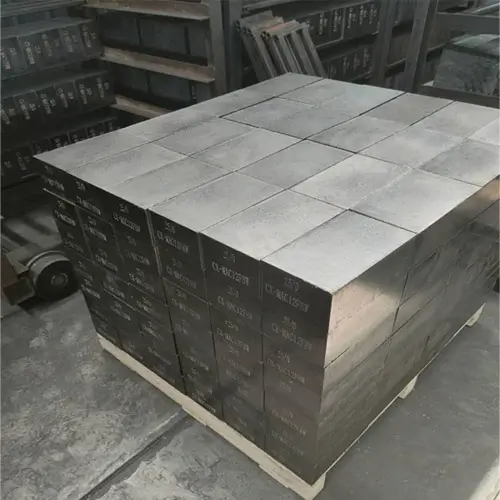
Spinel-type refractory raw materials primarily consist of natural chromite ore and a class of spinel-group mineral materials produced by sintering or electrofusion using chromite, magnesite, bauxite, or industrial alumina as feedstock.
5.1 Natural Chromite Ore
Chromite, more accurately termed iron-chromium spinel, does not occur as a pure mineral in nature. It typically forms solid solutions with magnesian chromite, spinel, and iron spinel, appearing as massive, granular, or brecciated aggregates. The massive and coarse-grained varieties are most suitable for brick manufacturing.
5.2 Chromium Magnesium Sand
Chromium magnesia sand is a magnesia-chromium spinel sand synthesized by blending natural magnesite, light-burned magnesia powder, or sintered magnesia with chromite ore in specific proportions, followed by fine grinding, pelletizing, high-temperature calcination, or electric melting. Chromium-magnesium sand is primarily used in the production of chromium-magnesium bricks and unshaped chromium-magnesium materials, finding extensive application across industries such as cement, glass, steel, and non-ferrous metals.
5.3 Magnesium-Aluminum Spinel Sand
Magnesium aluminum spinel rarely occurs naturally and is typically produced synthetically, exhibiting excellent properties. It is manufactured by high-temperature sintering or electric melting of magnesium oxide and aluminum oxide. Primarily used to produce magnesium aluminum spinel bricks and magnesium spinel bricks, it finds extensive application in high-temperature kilns within the cement, steel, and non-ferrous industries.
6. Carbonaceous raw materials
Carbon-based raw materials possess numerous advantages and are widely used in industries such as steel and non-ferrous metals, with significant consumption in refractory materials. Carbon exhibits stable chemical properties, high thermal conductivity, excellent electrical conductivity, low linear expansion coefficient, strong thermal shock resistance, non-wettability by most molten metals, and good wear and corrosion resistance. When used in refractory materials, it provides high strength but is prone to oxidation. Carbon-containing refractories are typical neutral refractories, which can be processed into calcined carbon bricks, self-calcining carbon bricks, silicon carbide bricks, and unshaped carbon ramming mixes.
Common carbon-based raw materials in refractories include graphite, carbon materials, and silicon carbide.
6.1 Graphite
Graphite serves as the primary raw material and essential component for graphite products (such as graphite clay products and graphite-silicon carbide products). China holds the world’s largest reserves of natural graphite. Based on its crystalline structure, graphite can be classified into flake graphite, lump graphite, and amorphous graphite.
6.2 Carbon Materials
Carbon materials used in refractories include coke, anthracite coal, and others. Carbon materials are most widely applied in iron and steel smelting, as well as non-ferrous metallurgy.
6.2.1 Coke
Coke is an amorphous carbon produced industrially by heating bituminous coal or other high-carbon substances (such as petroleum asphalt, residual oil, coal tar pitch, etc.) at high temperatures in an oxygen-free environment to coke them. The product of coal coking is metallurgical coke. The product of petroleum asphalt or residual oil asphalt coking is petroleum coke, while the product of coal asphalt coking is asphalt coke. Metallurgical coke is primarily used as blast furnace fuel and an iron reduction agent, and can also be used to produce various carbon blocks and carbon electrodes. The other two types have relatively fewer applications.
6.2.2 Anthracite
Anthracite is a key raw material for producing carbon bricks, silicon carbide, carbon electrodes, electrode paste, and bottom paste.
6.3 Silicon Carbide
Silicon carbide is also a very common refractory raw material in refractories, with a wide range of applications. It can be used in refractory bricks and unshaped materials, effectively improving product quality and service life.
7.Thermal Insulation Refractory Raw Materials
Thermal insulation refractories made from heat-resistant materials primarily aim to reduce heat loss from high-temperature kilns, decrease the kiln structure’s self-weight, and lower its external surface temperature. These materials play a crucial role in high-temperature kilns, typically used in conjunction with heavy-duty refractories to form multi-layered composite structures. This approach effectively extends kiln service life while promoting energy efficiency and environmental protection.
7.1 Hollow Sphere
Hollow spheres are produced by melting raw materials such as alumina or zirconia into a liquid state. Compressed air is then used to blow the high-temperature molten liquid into small droplets, which form hollow spheres under the combined effects of surface tension and centrifugal force. Common materials include alumina hollow spheres and zirconia hollow spheres. These types of hollow spheres are widely used in refractory materials, serving in the production of hollow sphere bricks and insulating castables. Due to their high purity, low impurity content, high strength, and low thermal conductivity, they are typically employed in manufacturing high-grade insulation materials. They exhibit excellent high-temperature performance and thermal insulation properties, and can withstand direct contact with flames.
7.2 Floating Beads
Floating beads refer to hollow microspheres of fly ash capable of floating on water surfaces. They are separated from the fly ash discharged from pulverized coal combustion furnaces and typically appear grayish-white. The chemical composition of floating beads varies considerably, closely related to the composition of the pulverized coal. Particle size typically ranges from 20 to 250 μm, with a specific surface area of 3000–3200 cm²/g and a bulk density generally between 250 and 400 kg/m³. Float spheres are commonly used in insulating castables. Due to their high cylinder compressive strength and low thermal conductivity, their primary purpose in formulations is to enhance the strength of insulating castables while reducing their thermal conductivity.
7.3 Diatomaceous Earth
Diatomaceous earth is a siliceous sedimentary rock formed from biological sources. Diatom shells measure approximately 5-400 nanometers in size and contain numerous microscopic pores, achieving a porosity exceeding 80%. This results in excellent thermal insulation properties. Bulk density serves as a key indicator of diatomaceous earth quality, with lower bulk density signifying superior quality. Diatomaceous earth is commonly used in the production of diatomaceous earth bricks, which exhibit good thermal insulation properties. However, the operating temperature must not exceed 900°C, as higher temperatures cause the silica in diatomaceous earth to transform into quartz, thereby losing its insulating properties. Additionally, diatomaceous earth is also used as a filler in refractory materials.
7.4 Perlite
Expanded perlite is formed when acidic volcanic lava expands at temperatures between 1,180 and 1,350°C, creating expanded perlite rich in closed and open pores with an expansion ratio exceeding 7 to 30 times. It possesses a low bulk density, typically ranging from 40 to 200 kg/m³, extremely low thermal conductivity, and a safe operating temperature below 800°C, offering certain refractory properties. Consequently, expanded perlite is extensively used in thermal insulation and refractory materials, with significant application in insulating castables. Its primary function is to reduce the thermal conductivity of insulation materials, while block-shaped expanded perlite provides adequate strength. It is widely employed for furnace and pipeline insulation in the petrochemical industry. Additionally, expanded perlite is utilized to produce certain molded products.
7.5 Expanded Clay Aggregate
Expanded clay aggregate is a spherical porous material produced by calcining low-melting-point clays, shales, fly ash, or coal gangue. It features a smooth, hard surface with a honeycomb-like internal structure, exhibiting low thermal conductivity and high strength. As a high-quality artificial lightweight material, it is primarily used as aggregate in thermal insulation and refractory castables.
7.6 Vermiculite
Vermiculite is a typical layered silicate mineral composed of minerals such as biotite and muscovite, with significant variations in its chemical composition primarily determined by the composition of the mica. Its characteristic thermal expansion makes it suitable for applications in refractory materials. When heated to 200°C, vermiculite begins to expand in volume, reducing its bulk density to between 600 and 900 kg/m³. After complete calcination, its bulk density can decrease to 100–130 kg/m³. It also possesses a low thermal conductivity and excellent thermal insulation properties. With a maximum service temperature of 1100°C, vermiculite can be incorporated as granules or fine powder to produce vermiculite bricks or insulating castables for use in slightly higher-temperature applications.
Summary
In addition to the commonly used primary refractory materials introduced above, non-oxide refractory materials are also employed in high-grade refractories. Examples include carbides, nitrides, silicides, borides, zirconia, and alumina-silicon nitride (ALON), typically added in small quantities. Furthermore, zircon, zirconia, chromium oxide, and aluminum titanate have also appeared in refractory compositions.
The above provides a general overview of the application of inorganic nonmetallic minerals in refractory materials. Refractory materials come in diverse types with varied compositions, and inorganic non-metallic minerals find extensive applications within this field. This paper has only listed some common and primary refractory raw materials, providing a brief analysis. It is impossible to cover every aspect comprehensively. Numerous potential inorganic non-metallic mineral materials remain untapped for application in the refractory industry, requiring active exploration and research by experts, scholars, and practitioners in both fields.